
 Bradan Donaldson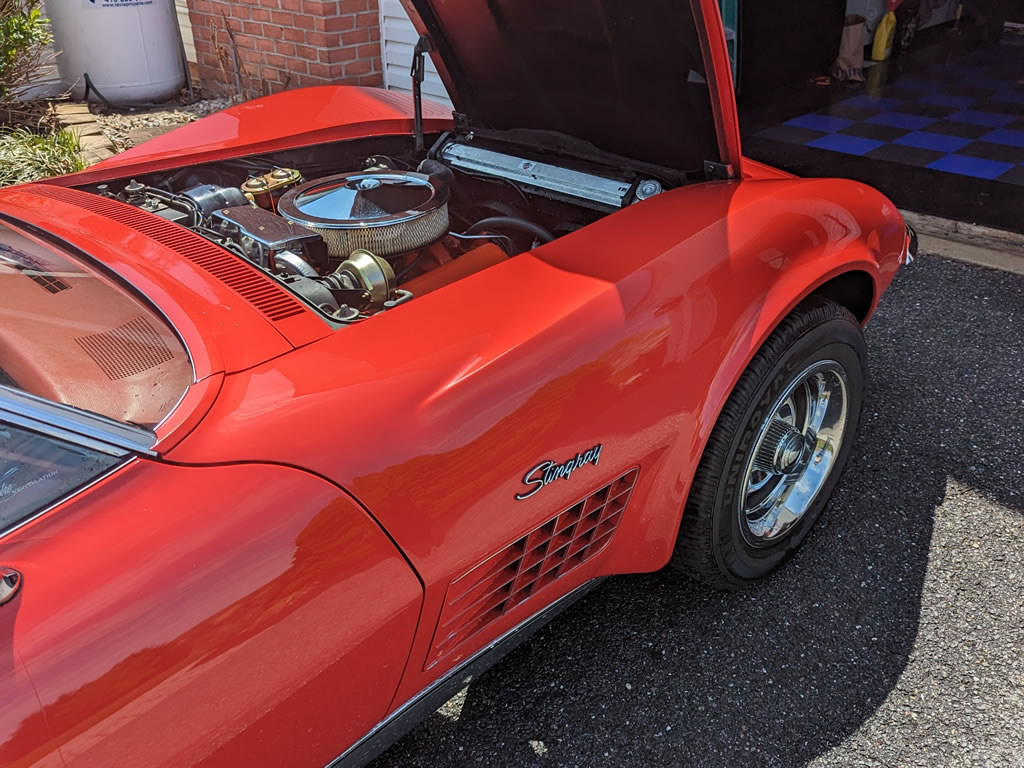
There’s a specific kind of dread that sets in when you’re idling at a red light in July, A/C off to save what little airflow you can get, watching that temp needle creep toward the hot side of the gauge. If you own a C1 through C4 Corvette, you know the feeling. And if you’ve mentioned it in the Classic Corvette subforums, you already know what happens next: fifteen replies, three theories about thermostats, someone insisting it’s the water pump, and at least one person telling you to “just get an aluminum radiator” like that settles it.
It doesn’t always settle it. But it’s a good place to start.
Your Corvette Was Built for a Different World
Think about what these cooling systems were designed around: leaded fuel, cooler average summers in a lot of the country, and stop-and-go traffic that looked nothing like what we deal with now. Add ethanol-blended gas, a warmer climate than 1967 planned for, and whatever engine work has been done since (a hotter cam, more compression, a bigger carb someone bolted on in 1994), and you’ve got a cooling system quietly working harder than it was ever meant to. That mismatch is why so many “why is my Vette running hot” threads end with someone upgrading a car that’s otherwise in great shape.
Aluminum or Copper? Depends What You’re Optimizing For
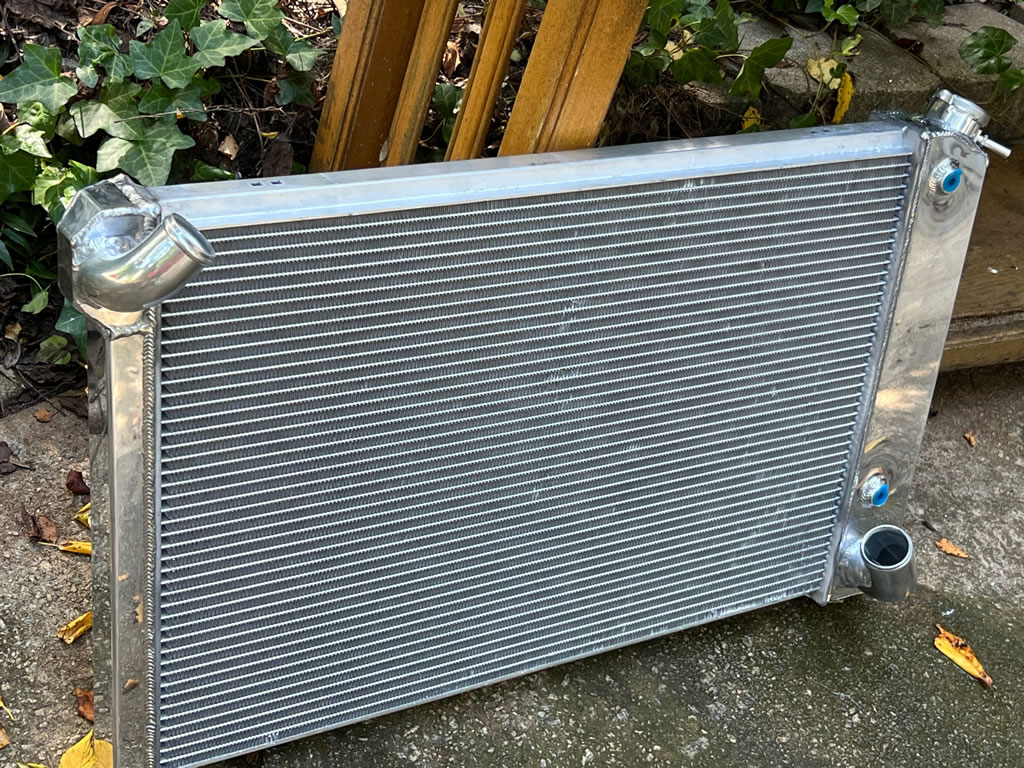
This is the debate that never actually ends, so let’s just lay it out. Aluminum radiators move heat more effectively than the copper/brass units these cars left the factory with, mostly because of larger tube design and better airflow through the core. Copper itself conducts heat beautifully, no argument there, but the old-school construction (small tubes, thick solder joints) doesn’t let you cash in on that conductivity the way you’d think. Aluminum also weighs less and shrugs off pressure better, which counts for something if your engine’s been built up or you’re the type who still drives your Vette hard in August.
Where it gets less clear-cut: appearance. If you’re chasing a numbers-matching look or planning to show the car, copper/brass still reads as correct in a way aluminum never will. So this isn’t really an “obviously go aluminum” situation for everyone. It’s a real tradeoff between how the car runs and how it looks under the hood, and only you know which one you care about more.
The Radiator Has to Match the Engine, Not Just the VIN
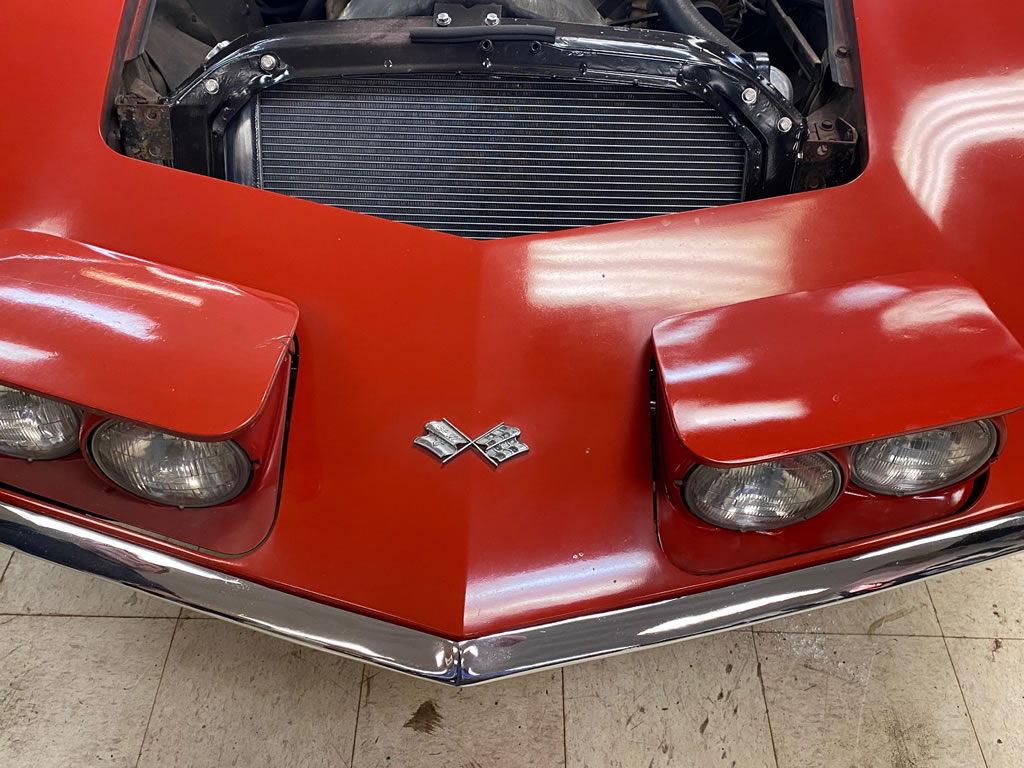
Here’s where people get burned. A big-block needs meaningfully more cooling capacity than a small-block, full stop. Past that, things like transmission type, mounting points, hose routing, and shroud clearance shift enough by model year that a “universal” radiator can leave you improvising brackets in your garage on a Saturday. Get specific about your generation and your actual engine combo before you buy, not just “it’s a C3.”
Sometimes It’s Not the Radiator at All
Worth being honest about this: an overheating Corvette is usually a systems problem, not a single-part problem. A tired fan clutch, a stuck thermostat, or a water pump on its way out will still leave you running hot even with a brand-new radiator bolted in. That said, if your current radiator has never been touched, is partially clogged, or was already marginal when the car left the factory, which describes a lot of these cars at this point, swapping to a modern high-efficiency unit can genuinely fix things, especially the kind of overheating that shows up at idle or crawling through traffic.
Where to Actually Look, By Generation
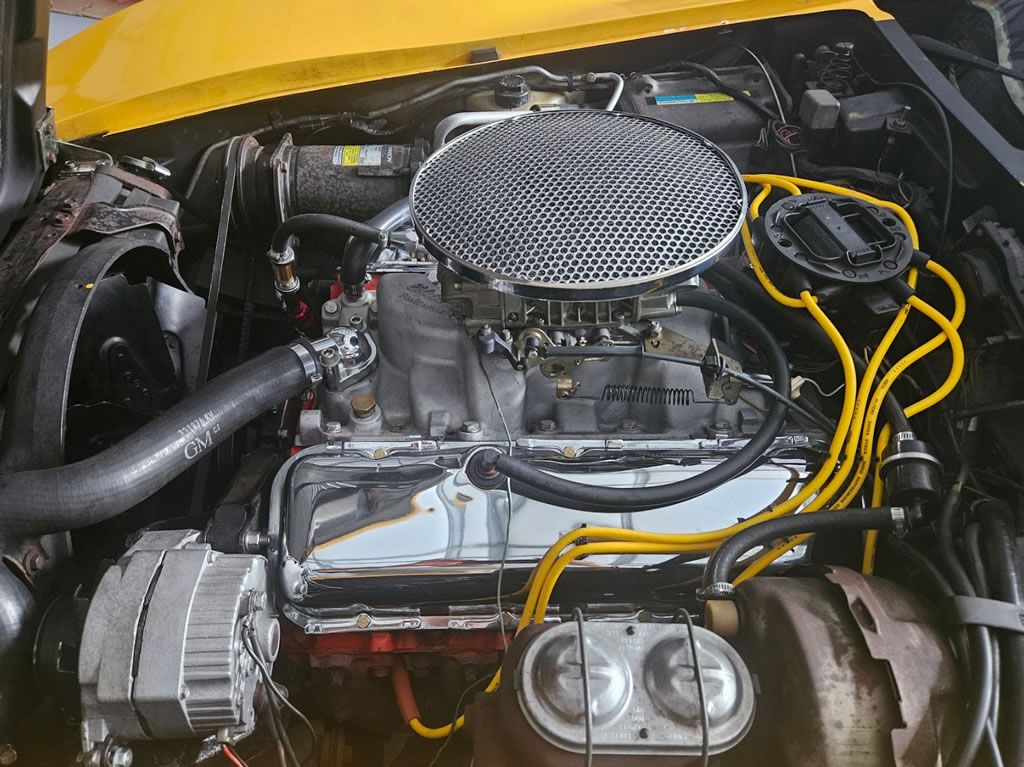
If you want to skip the debate and just see what fits your specific car, Eckler’s has a breakdown worth checking out: Top Classic Corvette Radiators for Every Budget & Performance Build. It splits things out by generation, so you’re not stuck cross-referencing part numbers to figure out what actually goes under your hood.
The Short Version
A hot-running gauge doesn’t automatically mean radiator problems, but when it is the radiator, the fix isn’t “buy the biggest aluminum unit you can find.” It’s matching the radiator to your generation, your engine, and honestly, how much you care about originality versus just staying cool in traffic. Get that right and you stop thinking about your temp gauge at all, which is really the goal.
Fighting your own overheating mystery? Drop your generation and engine combo in the Classic Corvette subforum. Odds are good someone’s already been exactly where you are.